
Tamarind
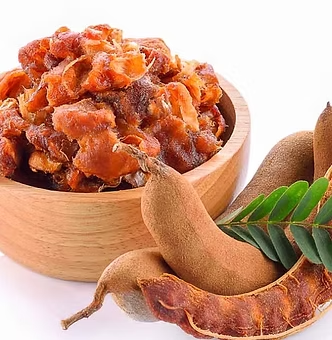
Tamarind is the dried pod fruit of a long-lived tropical tree, typically growing up to 30 metres tall, bearing pale yellow flowers with orange or red streaks. The leaves are finely pinnate and feather-like, closing gently at night. Once the pods ripen and dry naturally on the tree, the crop is harvested and the pulp is separated from the hard outer shell and fibrous strands. The fruit pulp is deep brown, sticky, and dense — packed within a brittle, curved pod ranging from 3 to 20 cm in length. In appearance, the pulp is dark reddish-brown, smooth in texture, and intensely aromatic. Tamarind carries a distinctly sharp, tangy flavour with a natural sweetness that deepens as the fruit matures — a profile entirely unique from its leaves, flowers, or bark.
India is one of the world's largest producers of tamarind, benefiting from its warm, semi-arid climate and fertile soils — particularly across Maharashtra, Andhra Pradesh, Karnataka, and Tamil Nadu. Tamarind is commercially available in multiple grades including whole pods, de-seeded pulp, block form, and concentrated paste. Beyond commercial grades, tamarind extract and powder are also widely traded in global markets.
Tamarind is extensively used as a culinary souring agent across Asian, African, and Latin American cuisines, and finds applications in beverages, confectionery, marinades, and chutneys. It is equally valued in traditional medicine and the pharmaceutical industry for its digestive, anti-inflammatory, and antioxidant properties.